
Research

Research
Meet our PI:
Dr. Rebecca Campbell-Montalvo’s
Research Spotlight
Dr. Campbell-Montalvo is a medical anthropologist whose research examines how social relationships, culture, and healthcare systems shape access to care and health outcomes. As Director of the AQUASS Research Laboratory, she integrates qualitative and mixed-methods research with implementation science to develop patient-centered interventions that improve healthcare access, shared decision-making, and health equity. Her work bridges anthropology, health services research, and implementation science, with a particular emphasis on Veterans and other underserved populations.
Earlier in her career, Dr. Campbell-Montalvo conducted ethnographic research examining educational and healthcare access among migrant and Indigenous communities in the United States. She explored how schools perceive and process demographic information, including how those perceptions may erase Indigeneity and impact resource access in her book The Latinization of Indigenous Students.
A central focus of Dr. Campbell-Montalvo's current scholarship is understanding how social networks and cultural models influence individuals' ability to access healthcare resources and make informed treatment decisions. Her research has demonstrated that access to care is shaped by personal relationships, community resources, cultural beliefs, and institutional structures. Using ethnographic methods, community-based participatory research, and implementation science frameworks, she identifies barriers to care while developing practical, evidence-based strategies that can be implemented across healthcare systems.
Her work has made important contributions to improving care for Veterans living with chronic kidney disease and kidney failure. Through multiple studies, she has examined how comprehensive kidney disease education changes patients' understanding of their illness, facilitates informed decision-making, and increases the adoption of home dialysis therapies. Her research has provided mechanistic evidence demonstrating how patient education transforms cultural beliefs surrounding kidney disease and empowers Veterans to participate actively in treatment decisions.
Dr. Campbell-Montalvo has also established a research program focused on improving healthcare access for Veterans and Service Members with traumatic brain injury (TBI). Her work investigates how providers identify patients who would benefit from personal network intervention, develops strategies to improve communication between patients, caregivers, and clinicians, and evaluates innovative approaches to integrating care partners into rehabilitation.
Upcoming Projects
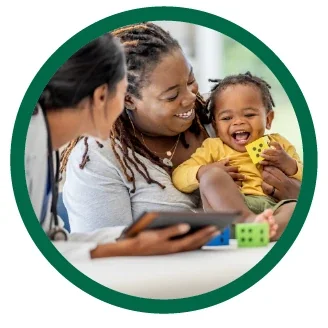
We have multiple medical anthropology projects under development centering social networks, cultural models, and structural vulnerability. We aim to gain foundational knowledge about how social networks support people in accessing care and have positive outcomes, particularly in the areas of traumatic brain injury and home dialysis usage.
Mission Statement
The AQUASS (Advancing Quality and Uniform Access through the Social Sciences) Research Lab is dedicated to improving health and well-being by advancing equitable access to healthcare through interdisciplinary research grounded in medical anthropology, social network science, and implementation science. We investigate how social relationships, cultural beliefs, organizational structures, and health systems shape health and healthcare. By integrating qualitative and quantitative methods, we generate research that informs network interventions, healthcare education, and promotes patient-centered systems of care. Our work is driven by the understanding that health is shaped not only by biology and clinical care, but also by the social environments in which people live, learn, and seek treatment.
Beyond advancing scientific knowledge, the AQUASS Lab is committed to cultivating a collaborative environment that encourages methodological innovation, community engagement, and meaningful partnerships across disciplines. By combining the strengths of medical anthropology, social network science, implementation research, and public health, we strive to generate evidence that informs policy, transforms practice, and advances delivery of healthcare systems in which every individual has equitable access to high-quality, person-centered care and the social support needed to thrive.
Traumatic Brain Injury

The goal of this study is to increase the understanding of social aspects of the study “Hyperbaric Oxygen Treatment for Veterans with Traumatic Brain Injury” (IRB Study #: STUDY006819) by identifying 1) information and attitudes affecting participation of veteran and service member study participants with TBI, 2) information and attitudes held by study researchers, and 3) the experiences and social effects of participation among participants and their family or caregivers. The primary aim is: To capture lived experiences of study participants, their family or caregivers, research team members, and policymakers in USF IRB Study 6819, to identify the social factors comprising the total ‘ecology of care’ affecting trial engagement and outcomes holistically. This application is for primary participants only and modification to the study will be submitted prior to including the secondary and tertiary participants.
This study will help contextualize the linked biomedical study processes and results within existing attitudes and information about brain health, brain injury, TBI, HBOT, and experimental and standard biomedical and behavioral health therapies. The goal of the qualitative research is to document the range of attitudes and information about brain health, brain injury, and brain science and treatment options existing among veterans, active-duty service members, scientists, providers, businesspersons, and policymakers.
HBOT as a Multidomain Intervention: Biological, Behavioral, and Ritualized Mechanisms in TBI Recovery

The AQUASS Lab currently runs the University of South Florida Hyperbaric oxygen therapy (HBOT) for traumatic brain injury (TBI) substudy. Anthropology is well equipped as a discipline to explain the influences that culture may have on TBI outcomes by drawing on theories and frameworks described below. HBOT is typically understood as a biological intervention aimed at improving cerebral metabolism, reducing inflammation, and promoting neuroplasticity following traumatic brain injury (TBI). Yet patients frequently describe changes that extend beyond standard clinical metrics, including early emotional regulation, increased motivation, improved adherence, and a restored sense of self.
This talk proposes a complementary framework for understanding these outcomes by examining HBOT as a ritualized clinical system. Drawing on medical anthropology and social theory, it synthesizes three perspectives: (1) Hinton and Kirmayer’s (2013) model of trauma as a multidomain regulatory loop, (2) Lende’s work on ritualized behavioral cycles and affect regulation, and (3) Collins’ (2014) theory of interaction ritual chains and emotional energy. Together, these models highlight how structured repetition, embodied sequencing, and patterned social interaction within HBOT may shape emotional regulation, engagement, and sustained participation over time.
Rather than treating ritual effects as symbolic or placebo-based, the presentation frames them as testable mechanisms, in which scheduling regularity, bodily preparation, the contained chamber environment, and repeated interactions with technicians operate alongside biological repair. This positions HBOT as a multidomain intervention in which biology, repetition, relationship, and motivation dynamically co-produce recovery.
View the full video here.
Chronic Kidney Disease
Veterans and Home Dialysis Access: Comprehensive Pre-Kidney Failure Education (CoPE)
Chronic kidney disease (CKD) affects millions of Americans but disproportionately affects US Veterans. An estimated one-third to nearly one-half of Veterans live with CKD, approximately two to three times the rate in the general US population, making it the fourth most common diagnosis within the Department of Veterans Affairs (VA). Additionally, each year thousands of Veterans progress to end-stage kidney disease (ESKD), which requires lifelong dialysis or a kidney transplant. Caring for Veterans with advanced kidney disease costs more than $18 billion annually, while patients often experience poor quality of life and high mortality after beginning dialysis.
Although dialysis is traditionally provided in outpatient dialysis centers several times each week, research has consistently shown that many patients can safely receive treatment at home. Home dialysis (HoD) offers survival rates comparable to in-center dialysis while providing greater independence, improved quality of life, and lower healthcare costs. Further, it reduces travel time, out-of-pocket expenses, and disruptions to the normal rhythms of life. Despite these advantages, only about 7% of Veterans with ESKD currently receive home dialysis.
This study is in partnership with Dr. Ashutosh Shukla at the University of Florida and is intended to correct an important systemic deficit in the care of CKD, VHA’s fourth most common healthcare condition with high mortality and healthcare burden. As many Veterans with CKD are ill-informed of their condition, which adversely affects their care, we anticipate that our proposed comprehensive pre-kidney failure education (CoPE) intervention will enhance Veterans’ knowledge of CKD and its management and increase Veterans’ confidence in making an informed selection of an appropriate dialysis modality. We believe that our strategy will increase Veterans’ utilization of HoD as advocated by the VHA National Kidney Program, improve Veterans' CKD care, access, satisfaction, and decrease VHA and Veteran costs.
The study aligns with the VA Secretary’s three top priorities: 1) “Greater choice for Veterans” in empowering Veterans to make more informed decisions about their healthcare; 2) “Strengthening Foundational Services in the VA”; and 3) “Improving Timeliness of Service” by providing the best access to care for Veterans with CKD. The study also aligns with HSR&D major priorities including “patient-centered care, care management, and health promotion” and “healthcare systems change.”
If successful, the project could transform how Veterans transition from chronic kidney disease to dialysis by making comprehensive education a routine part of kidney care. We believe this patient-centered approach has the potential to increase home dialysis use and ultimately provide Veterans with greater choice and control over their treatment.
The findings may also serve as a model for healthcare systems nationwide, demonstrating how standardized education and telehealth can improve care for patients living with advanced kidney disease.
Expanding Access to Home Dialysis for Rural Veterans Through the ALIGN Initiative
Researchers in the AQUASS Research Lab are leading a nationwide effort to improve kidney care for rural Veterans through the ALIGN for Kidney Failure Care initiative. Chronic kidney disease (CKD) is one of the most common and costly health conditions treated by the Department of Veterans Affairs (VA. More than one-third of Veterans living with CKD reside in rural communities, where access to specialized kidney care can be especially challenging. Caring for Veterans with advanced kidney disease costs the VA almost 20 billion annually, with dialysis representing one of the largest healthcare expenditures.
Although home dialysis has been shown to provide survival outcomes comparable to in-center dialysis while improving quality of life, independence, and patient satisfaction, it remains underused. Home dialysis also reduces healthcare costs by an estimated 15,000 to 20,000 USD per patient each year. National kidney organizations and the VA have identified expanding home dialysis as a priority, recognizing that many patients never receive the education needed to make informed decisions about their treatment options before kidney failure develops.
The ALIGN initiative addresses this challenge by providing Comprehensive Kidney Failure Education (CoPE), a standardized educational program that helps Veterans understand their disease, learn about all available treatment options, and choose the kidney therapy that best aligns with their personal goals and lifestyle. Rather than focusing solely on increasing home dialysis rates, the program emphasizes informed, patient-centered decision-making that empowers Veterans to actively participate in their own care.
Since its launch, the project has enrolled more than 1,500 rural Veterans across five geographically diverse VA healthcare systems in Florida, Utah, and Illinois. The research has demonstrated that while many rural Veterans strongly prefer home dialysis once they understand their options, relatively few ultimately receive it under current models of care. By implementing the ALIGN approach, participating VA healthcare systems have significantly increased Veterans' use of home dialysis while also demonstrating the potential for substantial healthcare savings.
Building on these successful results, our lab is now working with the VA Office of Rural Health to expand the ALIGN model. During the next phase of the project, additional VA healthcare systems will be trained to implement the program, while researchers evaluate barriers and facilitators to adoption through interviews with Veterans, clinicians, and healthcare leaders. These insights will help refine the model and support successful implementation in diverse healthcare settings.
Education
NSF INCLUDES Collaborative Change Consortia: Association of Collaborative Communities Ensuring Equity in Youth STEM+C Success (ACCEYSS)
The Association of Collaborative Communities ensuring Equity in Youth STEM+C Success (ACCEYSS) is an NSF INCLUDES Collaborative Change Consortia project, led by Texas State University (TXST), in collaboration with organizations and consortiums leveraging a national network of faith-based institutions and its population of 6 million children to broaden participation in STEM fields. ACCEYSS focuses on youth in two states, Texas and Florida, to improve access and participation in K-12 STEM+C education for students from middle school (grades 6-8) to entry into postsecondary STEM+C degree programs. The project implements innovative approaches to increase rigorous course-taking in middle school, high school, and postsecondary STEM+C degree programs across the U.S. This project builds upon the NSF INCLUDES Design and Development Launch Pilot project, ACCEYSS - Association of Collaborative Communities Equipping Youth for STEM Success (1764404) and an NSF CAREER award (2046079).
ACCEYSS is grounded in evidence that faith-based institutions are critical assets for broadening participation in STEM. For decades, faith-based institutions have been uniquely positioned to motivate and galvanize their congregations and constituents to drive action towards economic and social change. Community-engaged institutions of higher education, such as TXST, have also served as conduits of change. Most notably, TXST alumnus President Lyndon B. Johnson signed the hallmark Higher Education Act of 1965 at his alma mater, which increased educational access for low-income students. ACCYESS leverages faith-based institutions as historically significant structures to drive collaborative systems change in the U.S. K-16 STEM+C education pipeline. Complementing work traditionally done in formal educational settings, the new understandings gained through ACCYESS research will inform the processes through which students experience and persist in STEM+C contexts and the role that modern faith-based entities can play in STEM+C education. This project is funded by the NSF Eddie Bernice Johnson Inclusion across the Nation of Communities of Learners of Underrepresented Discoverers in Engineering and Science (INCLUDES) Initiative, which seeks to motivate and accelerate collaborative infrastructure building to advance and sustain systemic change to broaden participation in STEM at scale. This award is also supported by the Improving Undergraduate STEM Education: Hispanic-Serving Institutions (HSI) program, which aims to enhance undergraduate STEM education and build capacity at HSIs.
This award reflects NSF's statutory mission and has been deemed worthy of support through evaluation using the Foundation's intellectual merit and broader impacts review criteria.

