

Research
We use in vivo and in vitro models of cerebrovascular injury and a range of techniques such as in situ hybridization, immunoprecipitation, immunochemistry, high-throughput sequencing, microarrays, reporter assays, gain- or loss-of-function strategies, imaging, and bioinformatics to study RNA biology and function in brain damage.
Focus Area 1: Cerebral ischemia (stroke)

Ischemic stroke is a leading cause of disability and death in the United States. To date, there are no FDA-approved therapeutic interventions available. Our goal is to improve our understanding of the molecular processes driving the cellular and systemic changes that result in brain damage and neurological dysfunction so that we may harness this knowledge to develop new treatments against stroke. Our research is focused on transcriptomics, epigenetics, and gene regulation, and we study how the interplay between RNAs, regulatory proteins, and DNA modulates the gene regulatory networks that underlie the development of the post-stroke pathophysiology. Because RNAs are amenable to therapeutic manipulations, we hope to discover new druggable targets that can be developed for clinical applications against stroke.
Focus Area 2: Chronic cerebral hypoperfusion (CCH) and vascular dementia

Chronic cerebral hypoperfusion (CCH) is a contributing factor to the development of vascular dementia/vascular cognitive impairment, the second most common form of dementia after Alzheimer’s disease (AD). Aging- associated hypoperfusion is widely recognized in the elderly population, however, the pathophysiological link between hypoperfusion and vascular dementia remains poorly understood. Filling this gap in knowledge is of great significance in our quest to halt the development and progression of AD and AD-related dementias (ADRD). Leveraging our expertise in RNA biology, epigenetics, and cerebrovascular injury, our efforts are focused on understanding the relationships between genome organization, gene regulation, gene expression, and cellular outcomes in the cortical and subcortical regions of the brain that are the most significantly affected and implicated in the development of vascular dementia. These findings will be linked to cognitive and behavioral deficits, and novel molecular targets will be identified for therapeutic manipulation to minimize or reverse the adverse behavioral outcomes.
PROJECTS

Project 1: Regulation of gene expression by enhancer-RNAs in cerebrovascular injury
Enhancers undergo activity-dependent transcription to produce noncoding enhancer RNAs (eRNAs). Some of these eRNAs have been shown to play central roles in organizing functional interactions between the enhancers and their downstream gene targets and influence cellular outcomes. We recently identified several novel stroke-responsive eRNAs in the post-stroke cerebral cortex. Loss-of-function experiments resulted in pronounced molecular and phenotypic outcomes, which suggest important roles for the eRNAs in the post-stroke brain. Our work in this area is focused on identifying the molecular targets of these eRNAs, the cellular and physiological processes that they influence, and their sex-based expression and functional characteristics using in vitro and in vivo models of stroke. We are further extending this work to mouse models of vascular dementia to understand the roles of eRNAs in modulating gene expression networks in the subcortical regions of the brain during CCH.
Project 2: SINE-RNAs and post-ischemic gene regulation
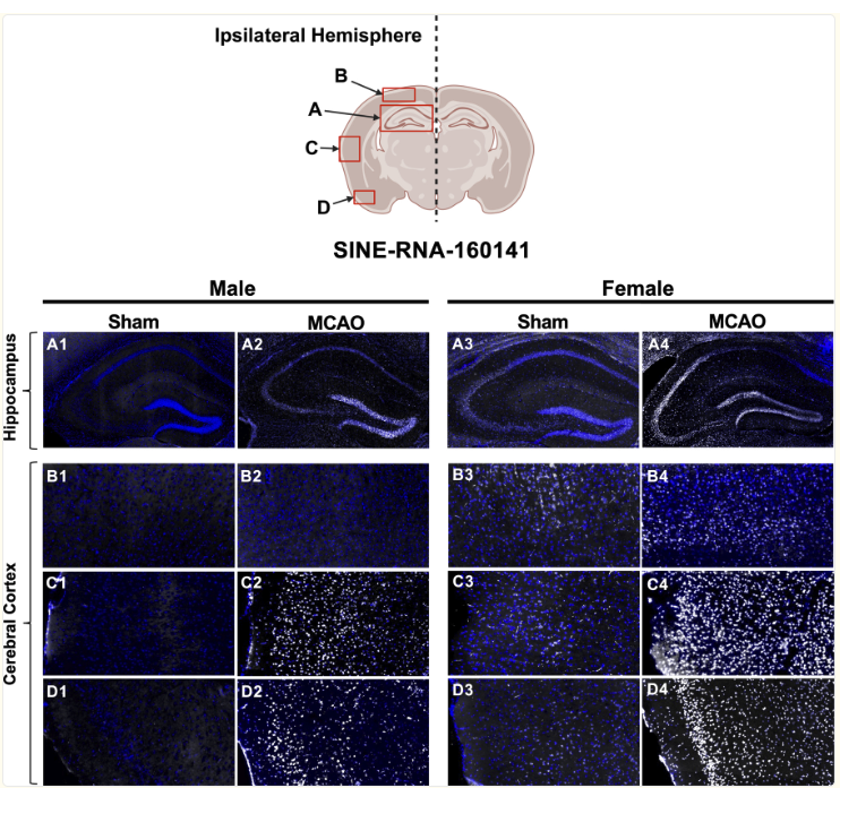
We recently identified rapid, RNA polymerase III–driven induction of short interspersed nuclear element RNAs (SINE-RNAs) following cerebral ischemia, revealing a previously unrecognized transcriptional response during acute reperfusion. These RNAs are expressed in neurons across ischemic brain regions, in many instances exclusively in response to ischemia, and are conserved across in vivo and in vitro models. Their expression patterns and preliminary functional data in our lab indicate that they have neuroprotective functions and their nuclear localization suggests roles in chromatin and transcription regulation. Ongoing work in our lab is focused on defining the regulatory mechanisms, cellular functions, and pathological relevance of SINE-RNAs in post-stroke neuroprotection and pathophysiology.
Project 3: Gene expression and brain pathology during chronic cerebral hypoperfusion
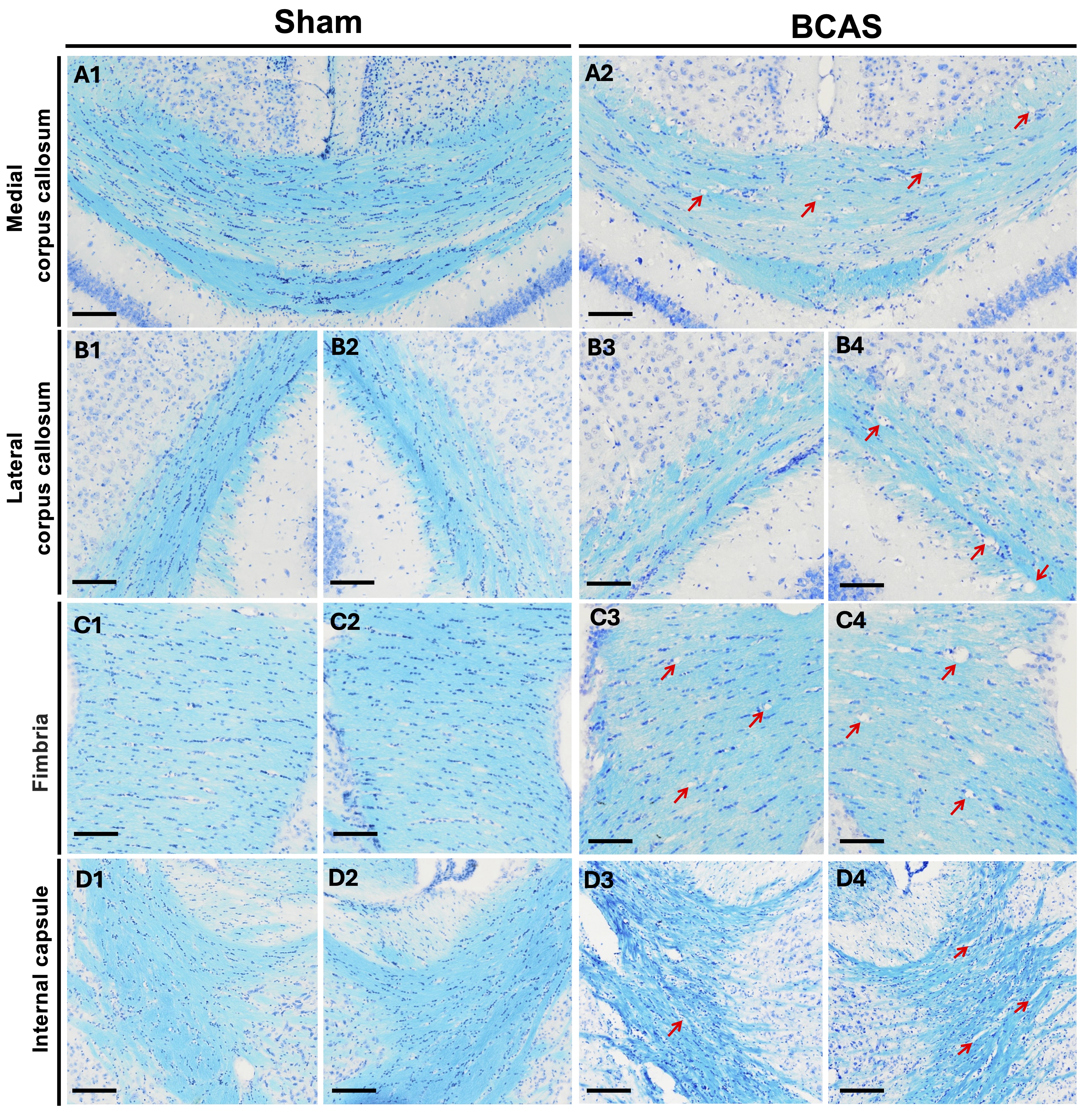
Vascular dementia (VD) is the second most common form of dementia worldwide, representing approximately 15% of all dementia cases and affecting millions of people. Chronic cerebral hypoperfusion (CCH), which induces a sustained reduction in blood flow to the brain over a long period of time, is one of its major drivers. The biological processes and mechanisms underlying the development of VD due to CCH are largely unknown. To addresses this, our lab uses the bilateral carotid artery stenosis (BCAS) mouse model to induce CCH and study how it affects the brain from the earliest stages of injury to the full-blown manifestation of VD at the final stages of injury. Using behavioral testing, histological analyses, deep sequencing, proteomics, and spatial biology, we are mapping the regional, cellular, and molecular changes that emerge early during the injury and evolve over time, to determine how these changes relate to subsequent neurodegeneration and cognitive impairment. Our long-term goal is to understand the causal biology of vascular dementia and identify strategies for future therapeutic development.
Project 4: Studying ischemia-reoxygenation injury in human cerebral organoids
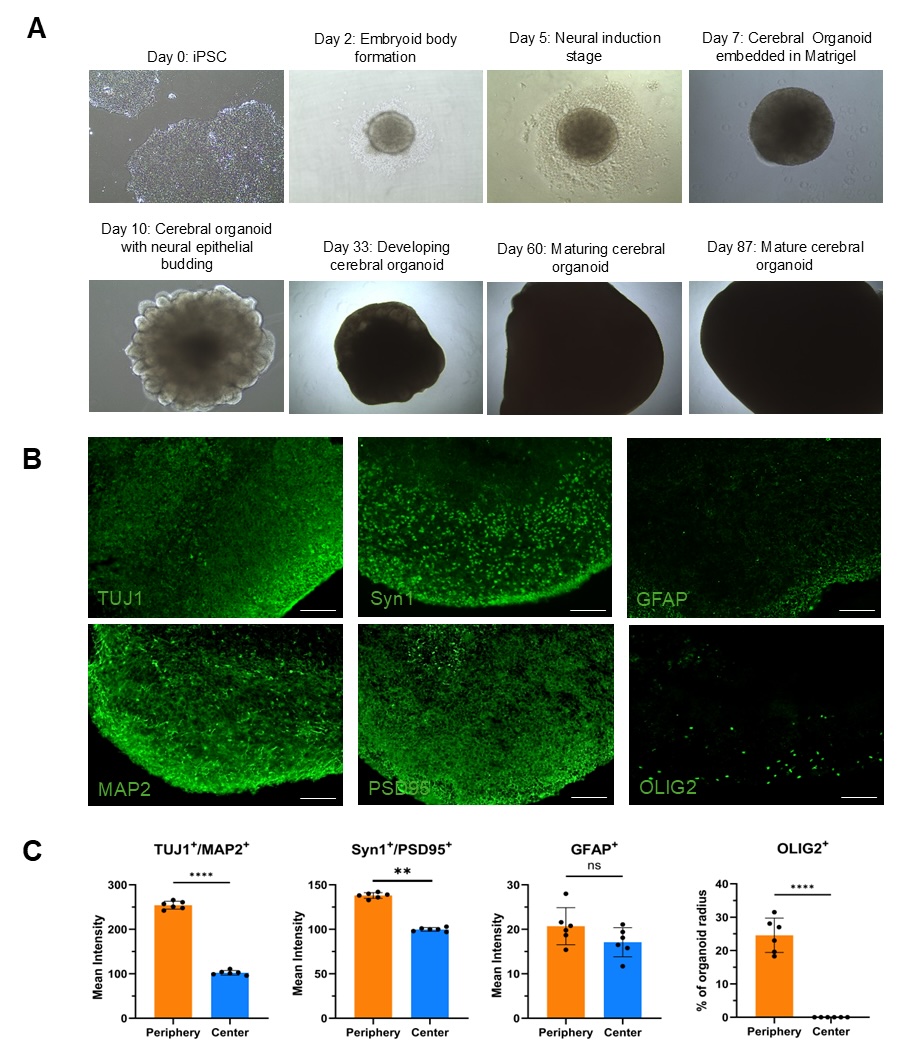
Ischemic stroke remains a leading cause of death and long-term disability worldwide, yet no FDA-approved neuroprotective therapy exists. Animal models, while informative, cannot fully capture the species-specific biology of the human brain, and a direct study of human post-stroke tissue is severely limited due to lack of suitable samples. In our quest to address this major limitation in translation of laboratory findings to clinical therapies, we have recently established human iPSC-derived cerebral organoids as a human-relevant alternative model to study how brain parenchyma-like tissue responds to ischemia-reoxygenation injury. By subjecting mature organoids to oxygen-glucose deprivation (OGD) followed by reoxygenation, we investigate the resulting injury at the cellular and molecular levels using both classical biochemistry and contemporary approaches such as genome-wide sequencing, high-throughput proteomics, and spatial biology to map how post-ischemic gene expression evolves and drives the subsequent pathology. We have benchmarked some of the organoid responses against human post-stroke brain tissue data to confirm that the organoid model recapitulates clinically meaningful molecular responses and biological pathways. We are building upon these early discoveries to further develop and use cerebral organoids as a tractable platform to identify the genes, pathways, and mechanisms that drive human ischemic brain injury, with the goal of uncovering new, human-relevant therapeutic targets that may improve our chances of success in translation to the clinic.