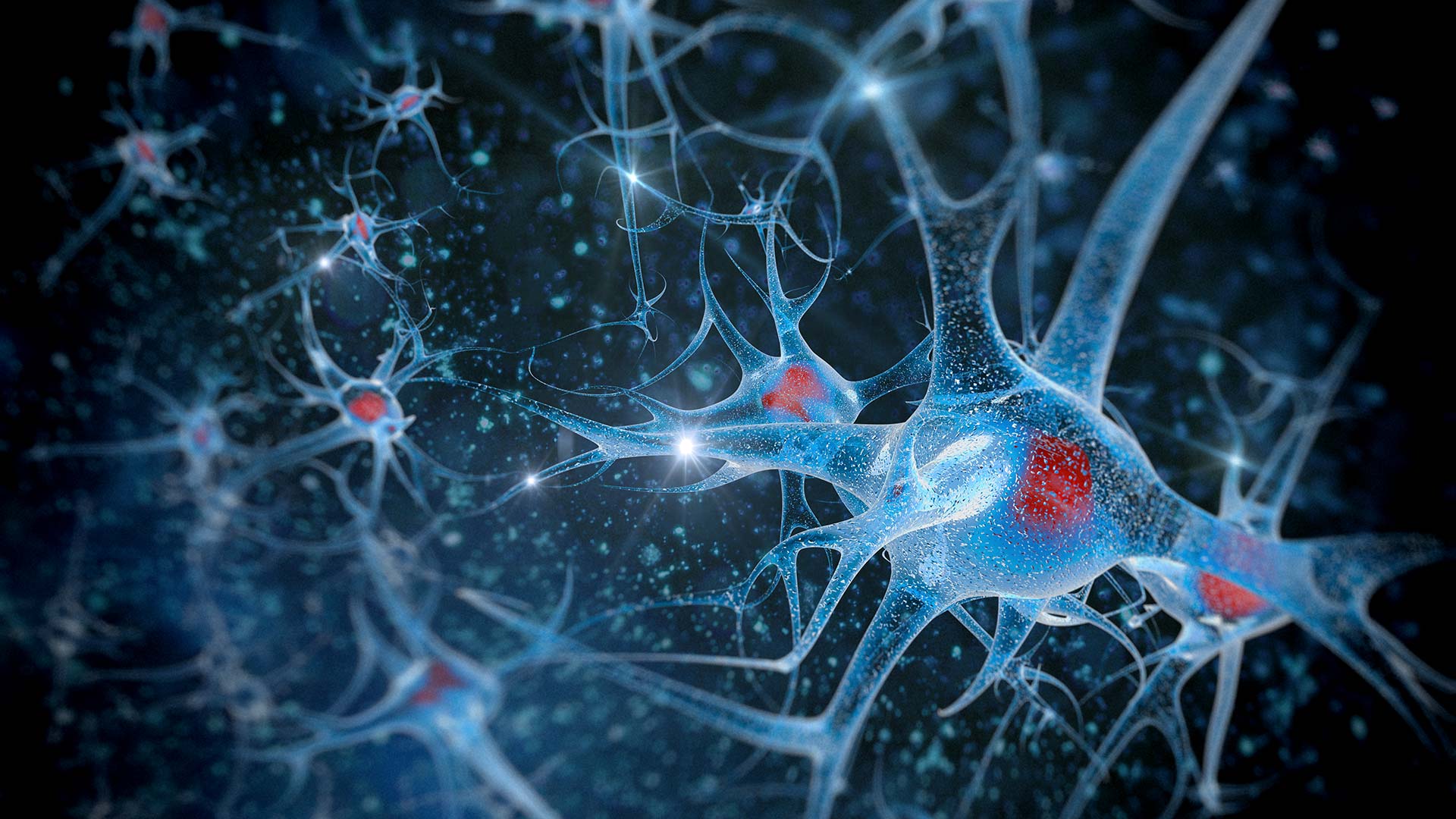
Digital illustration neurons showing pain receptors in the brain.

Neuromusculoskeletal Biomechanics and Chiropractic (NeuBaC)

Mission:

Improve the human condition through movement, motor control, injury prevention, and improved rehabilitation.

Neuromechanics

Neuromechanics research is crucial for understanding how the brain and nervous system control movement in conjunction with mechanical aspects of the body, such as muscles and joints. Our research helps to:

  1. Understand Movement Disorders

  2. Prevent Injuries

  3. Improve Rehabilitation

  4. Enhance Sports Performance

  5. Advance Prosthetics and Exoskeletons

  6. Inform Robotics

Overall, neuromechanics research plays a critical role in advancing our understanding of human movement and developing technologies and therapies to improve health, performance, and quality of life.

Learn more about our research

Nathan Schilaty

DC, PhD

Director and Associate Professor

Meet the Team

Latest News

Featured Publications

  • Tran M, Holler J, Moran B, Schilaty ND, Templeton JM. Predicting time to clearance of sport-related concussions using machine learning.. Digital health. 2026;12:20552076261450858. PMCID: PMC13191159

    OBJECTIVE: To evaluate whether integrating longitudinal clinical data improves machine learning (ML)-based prediction of time to medical clearance following sport-related concussion (SRC) and to identify clinical features most strongly associated with classification of either 'prolonged' recovery ( 30 days) or 'normal' recovery (< 30 days).

    METHODS: A retrospective cohort of 217 athletes (mean age 26.94 years) from the USF Concussion Center (2021-2025) was analyzed. Six ML classifiers were trained on Visit 1 features (n = 48) and combined Visit 1 + Visit 2 features (n = 95). Internal validation was performed using Leave-One-Out Cross-Validation (LOOCV).

    RESULTS: Prolonged recovery occurred in 81.1% of the cohort. Adding Visit 2 features improved accuracy in 66% of models, with XGBoost achieving the highest accuracy (0.84, +5% gain over Visit 1). Specificity remained low (0.00-0.34) due to class imbalance. VOR Vertical Headache and its change score were the most frequent predictors of prolonged recovery, present in 81% and 100% of models, respectively. Treatment presence between visits emerged as the strongest predictor of normal recovery.

    CONCLUSIONS: Longitudinal clinical data modestly improves ML-based SRC recovery predictions. Vestibulo-oculomotor symptoms - particularly headache provoked during vertical VOR testing - are robust prognostic indicators. These findings support the utility of granular VOMS subscores for early risk stratification and targeted rehabilitation. External validation is required before clinical deployment. Code: https://github.com/MeganTran6023/Sport-Related-Concussions_Machine-Lear…. IRB: USF STUDY003514.

  • BACKGROUND: Traumatic brain injury (TBI), particularly mild forms resulting from blast exposure, remains a diagnostic challenge among veterans due to delayed symptom onset and overlapping psychological conditions such as posttraumatic stress disorder. Current diagnostic methods rely heavily on subjective assessments, contributing to underdiagnosis and inconsistent care. Electroencephalography (EEG) offers a non-invasive, real-time measure of cortical activity with high temporal resolution, making it a promising tool for objective TBI assessment. This sub-study, nested within a randomized controlled trial evaluating hyperbaric oxygen therapy (HBOT) for veterans with TBI, investigates EEG as both a diagnostic modality and a therapeutic monitor.

    METHODS: This sub-study adopts the same triple-blinded, randomized, parallel-group design as the parent trial. Participants are veterans with mild to moderate TBI, randomized to receive either HBOT or a sham treatment. EEG data are collected at three time points: baseline (pre-treatment), midpoint (18-21 dives), and post-treatment (2 weeks after completion). EEG recordings are performed during standardized cognitive and motor tasks using a 32-channel wireless headset. Primary outcomes include event-related potential amplitudes and alpha-band spectral power, analyzed for longitudinal changes and group differences. Secondary outcomes include latency measures, spectral power across additional frequency bands, and functional connectivity metrics. Data are modeled using repeated measures analysis to assess treatment effects and individual trajectories.

    DISCUSSION: This sub-study aims to validate EEG as a scalable and objective tool for diagnosing and monitoring TBI in clinical settings. By identifying electrophysiological signatures associated with injury severity and treatment response, EEG may enhance diagnostic precision and support personalized care strategies. The integration of EEG within a larger therapeutic trial framework allows for comprehensive evaluation of its clinical utility. Findings may inform future protocols for TBI assessment and contribute to the development of neurophysiological biomarkers that complement existing symptom-based approaches.

    TRIAL REGISTRATION: ClinicalTrials.gov NCT06581003. Registered on 30 August 2024.